A Zero-Land-Take Green Campus in Forlì
The New Hub of the University of Bologna
One of Italy’s most innovative university campuses in Forlì: an exemplary urban regeneration project achieved with zero land consumption.
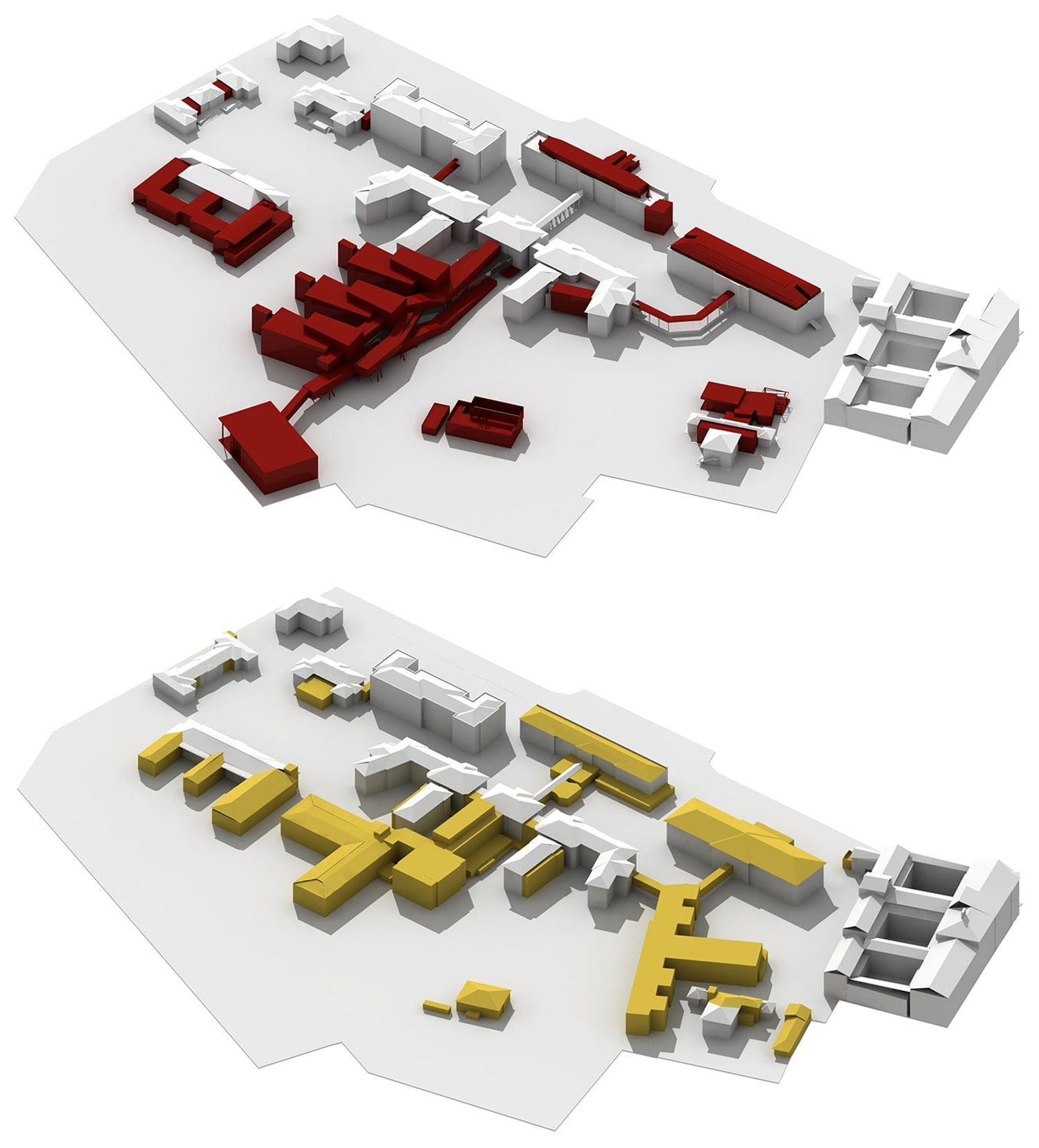
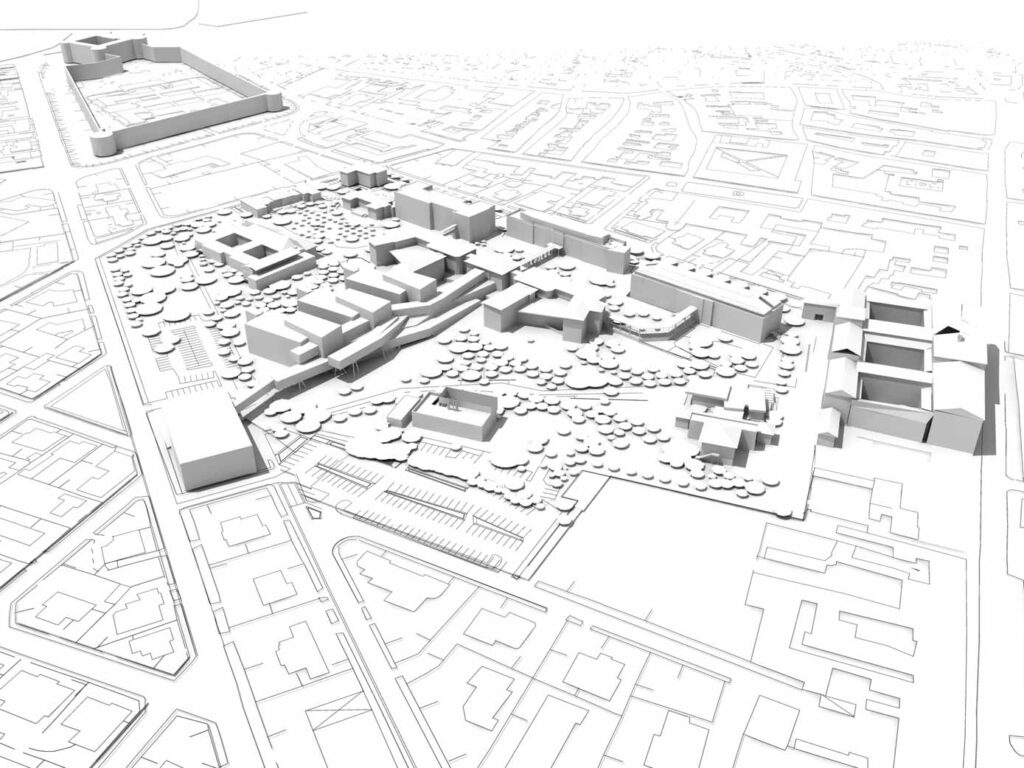
Extract from Lamberto Rossi Associati: It is the new hub of the University of Bologna, created through the adaptive reuse of the former city hospital - a pavilion-based complex from the early 20th century, located on a 9-hectare site at the edge of the historic centre.
The project stems from a multi-stakeholder Agreement between the Ministry, the University of Bologna, and the Municipality of Forlì, through which the Municipality provided the land and buildings. It is the result of a two-stage international design competition, won in 2000 by the team led by Lamberto Rossi together with Massimo Galletta, Roberto Lazzarini, Marco Tarabella and Polo Zilli.
Leveraging the site’s newly central position within the contemporary urban fabric, the campus is conceived as a bridge between the historic centre and the modern city - between tradition and innovation, between Forlì’s past and future.
Restoration and new construction coexist following several key urban principles: reinstating the original cardo-decumanus grid as a permeable, “through” axis; returning the park to the city as a connector along both directions; reclaiming the semi-basement level as a “public” space; and reinterpreting the glazed joints as bridges and connectors between pavilions.
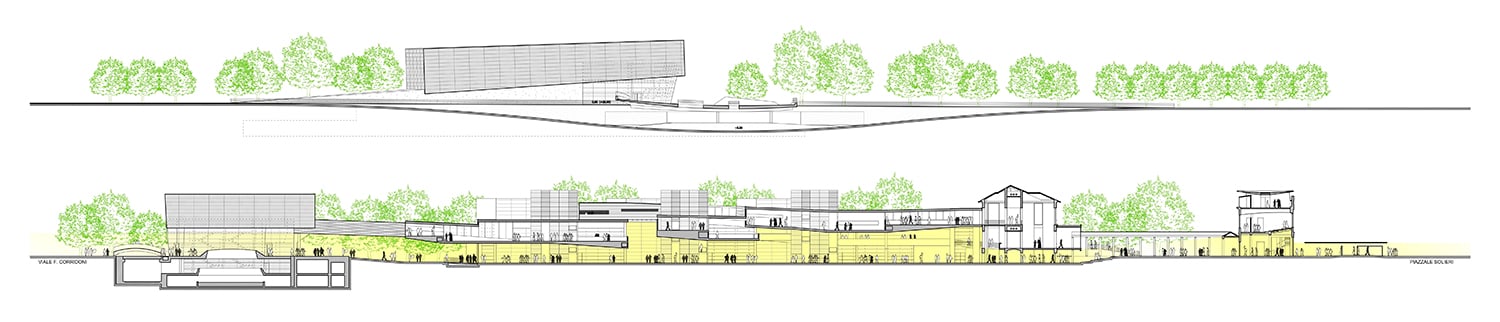
The result is a 250-metre “urban promenade” composed of both restored and newly built pavilions, set within a lush park that finally “opens” this once-inward, often emotionally heavy area to the city.
This campus is unique in Italy because it merges the Anglo-Saxon character of a park campus - 5 hectares and 400 mature trees - with the historic role of major Italian and Central European universities as permeable, city-integrated institutions.
It also offers a replicable approach to converting large, decommissioned public facilities, especially those built in the decades after Italian unification - an extensive building stock located at the edge of historic centres, in that circular belt now crucial to reconnecting peripheral areas to the urban core.
In Forlì, this regeneration process has produced a visionary, exuberant place with a strong contemporary identity.
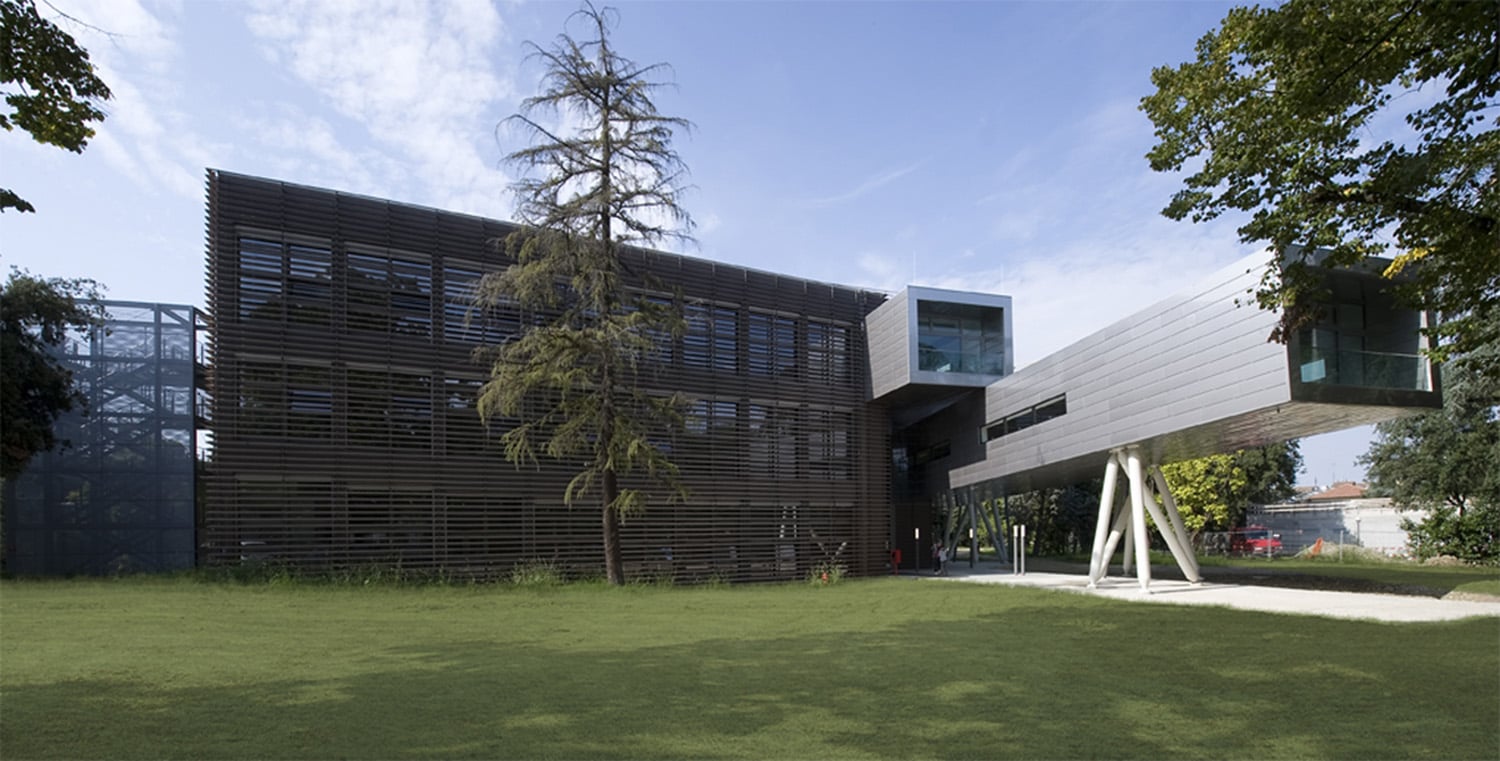
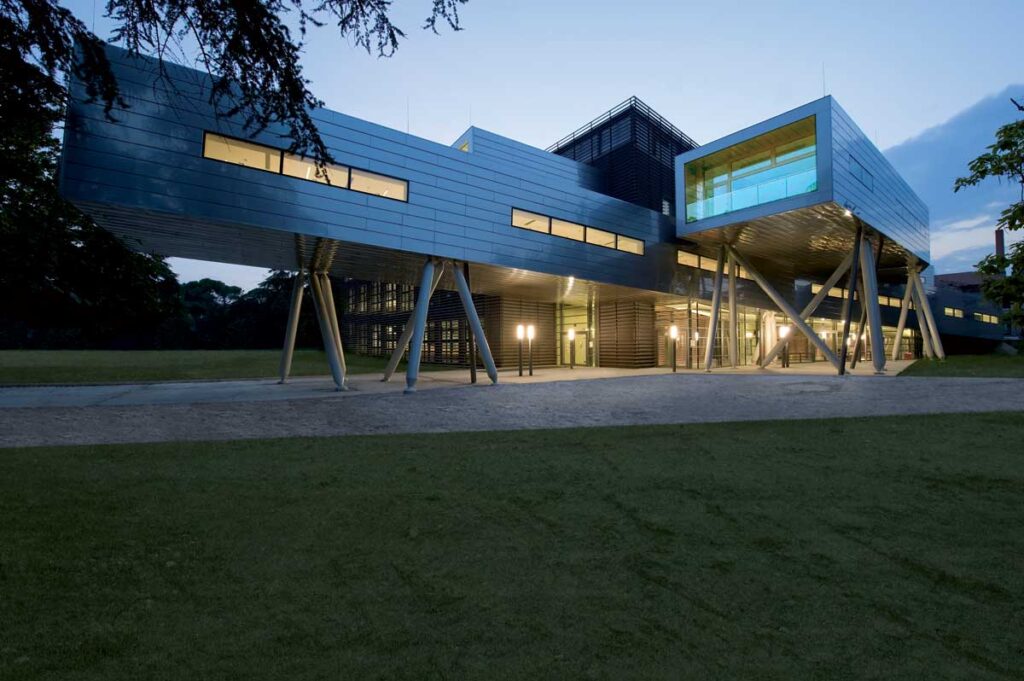
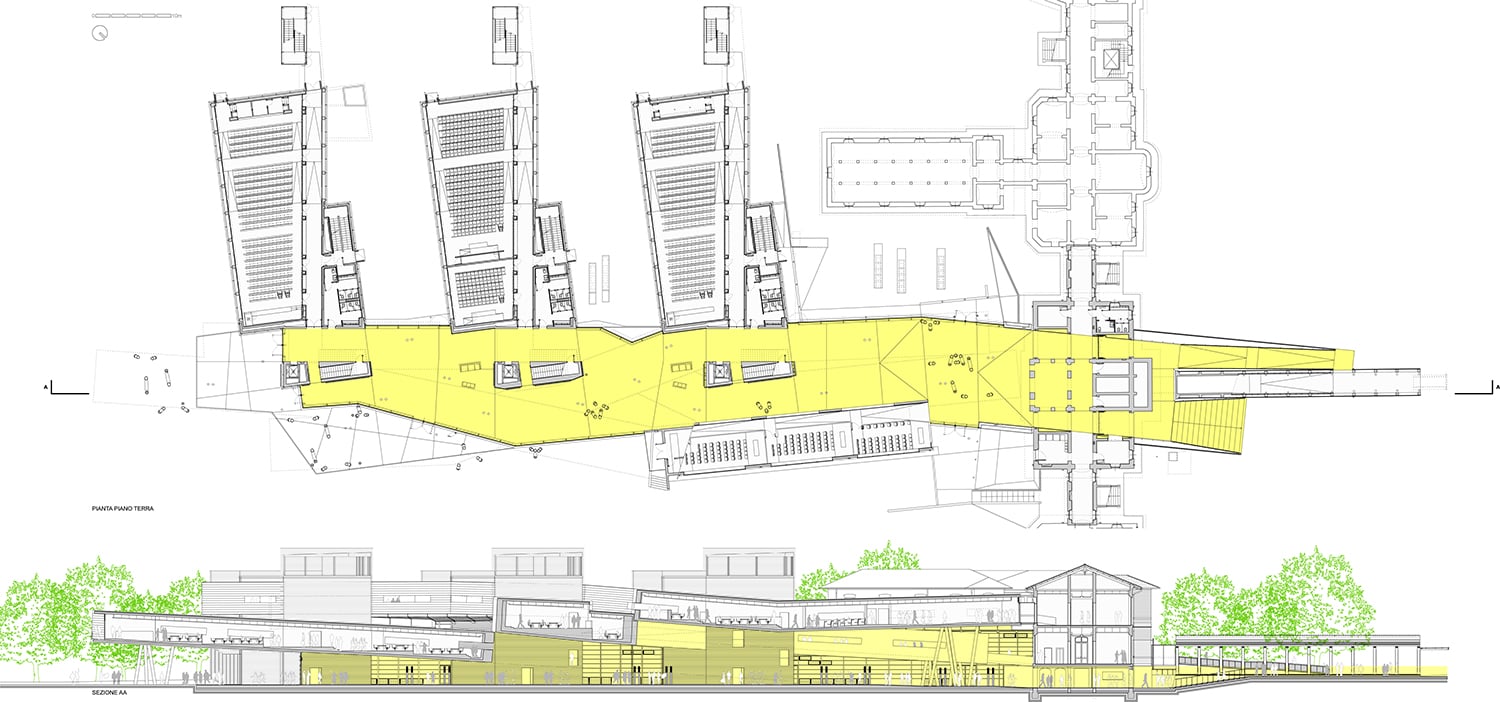
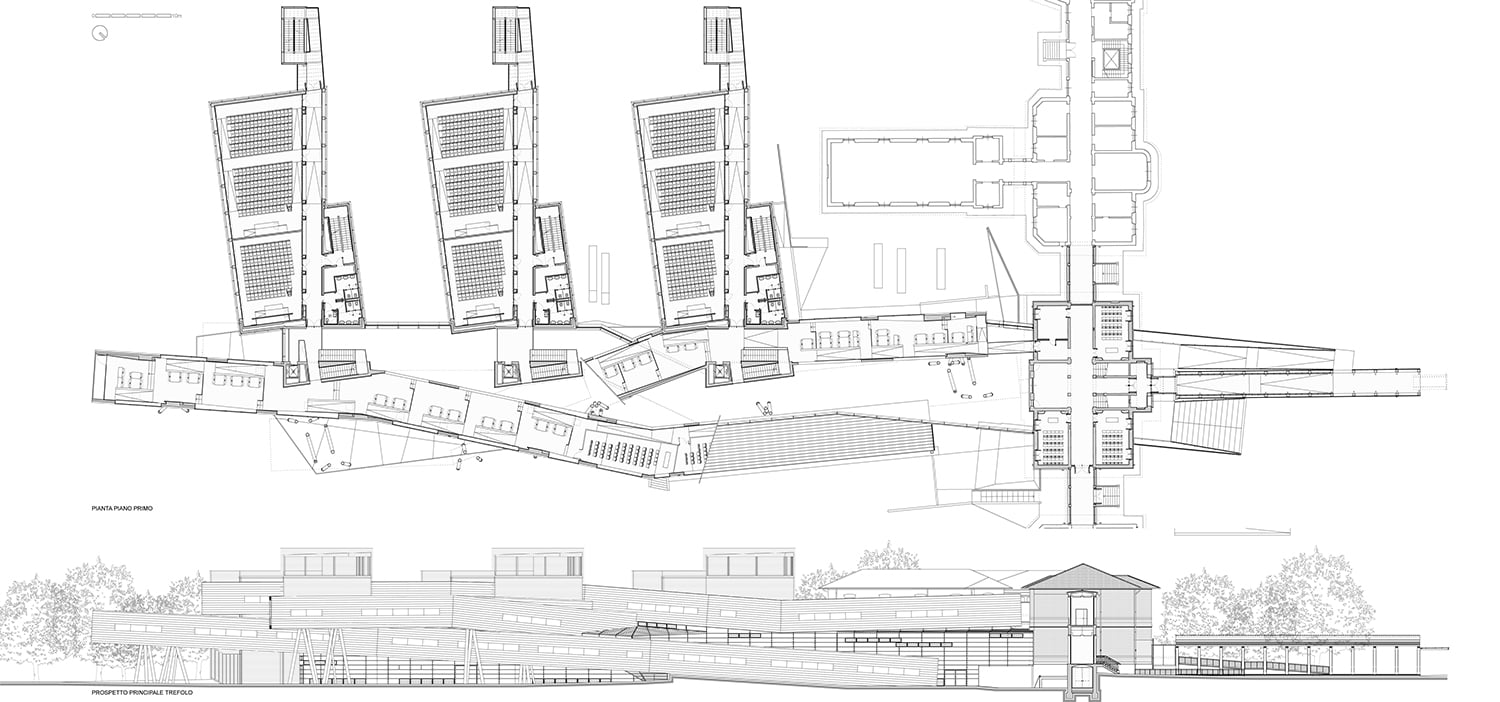
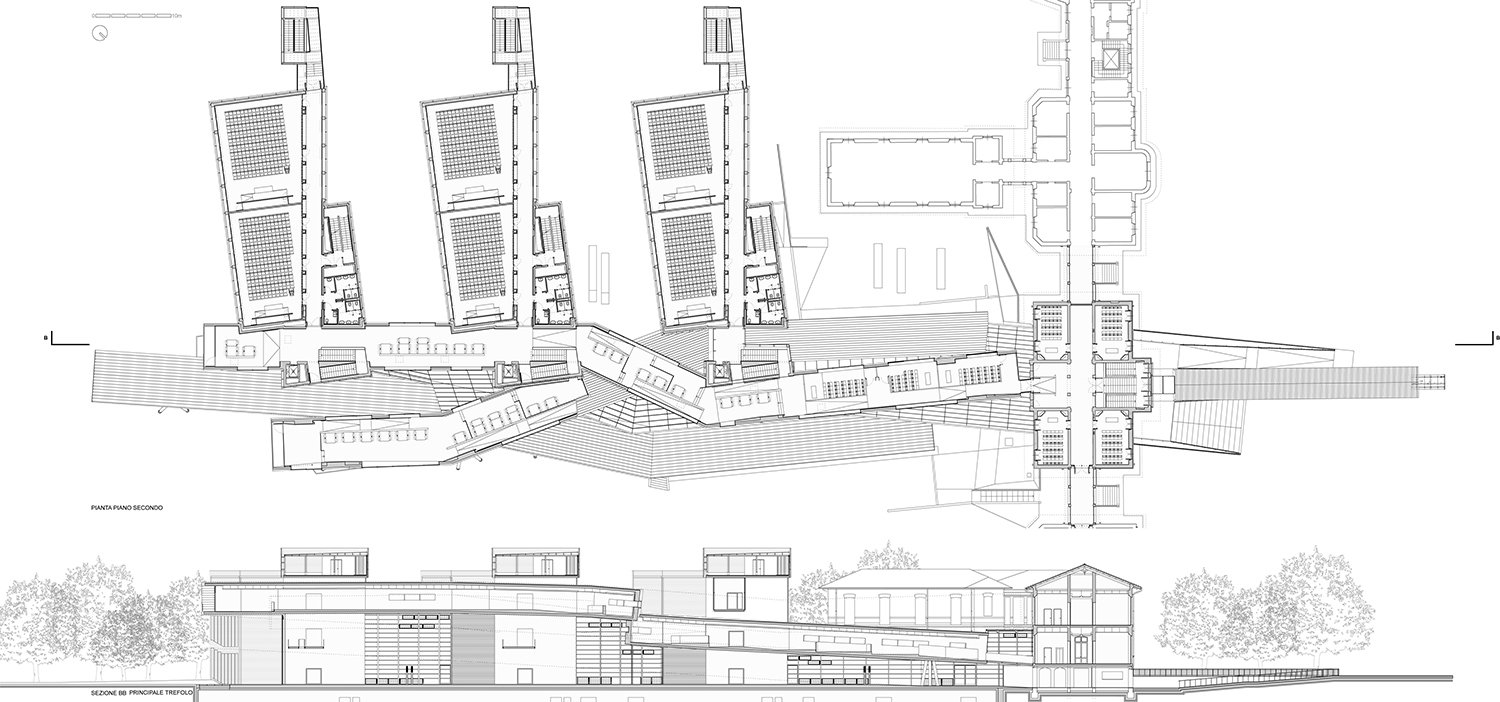
Built in multiple phases starting in 2003, the project reached its most ambitious completion in October 2014: the new Teaching Hub, composed of three classroom blocks and the “trefolo”, the system’s backbone - a long, light, transparent urban gallery opening onto the park.
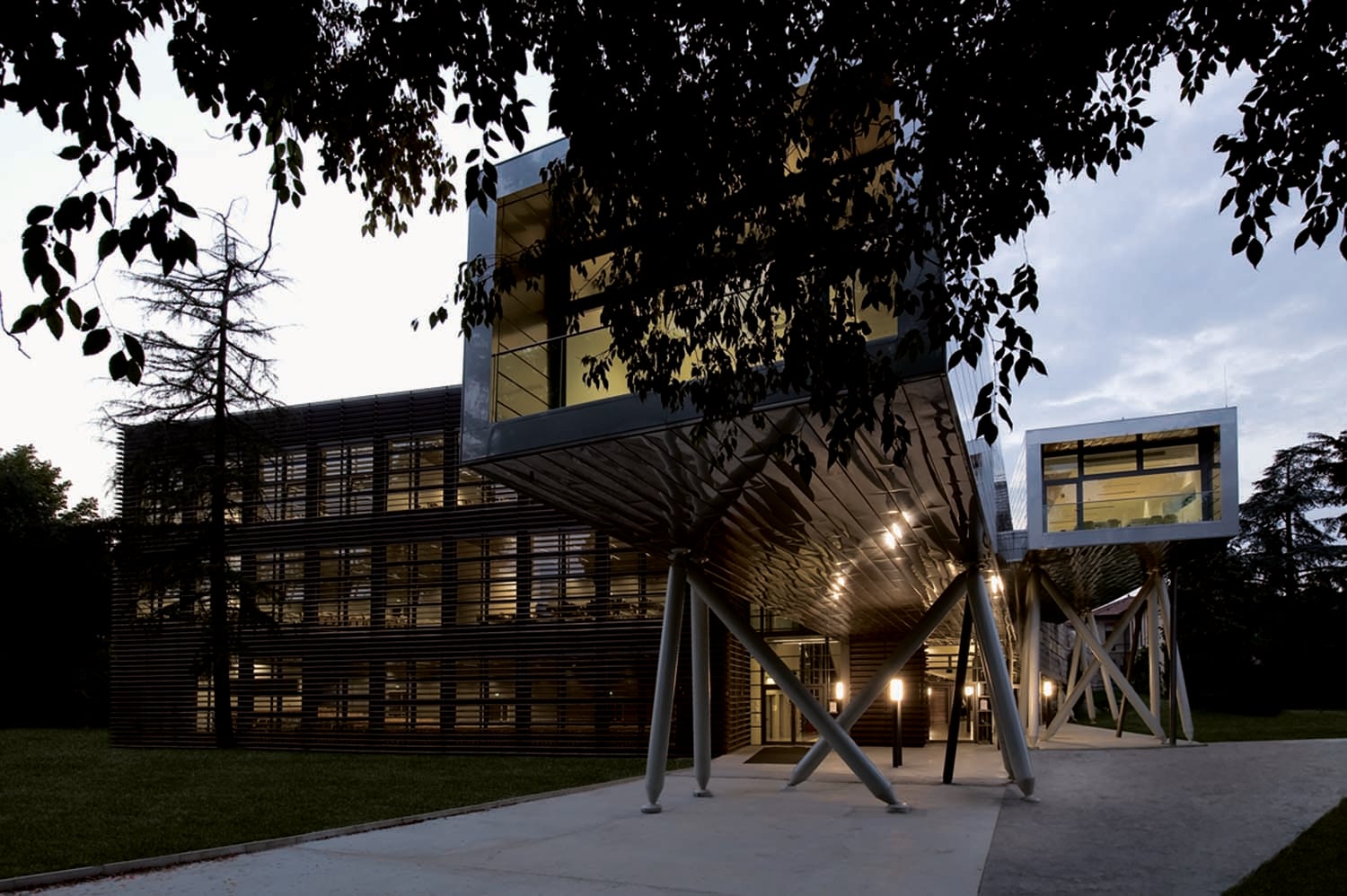
Three intertwined “paths,” each 6×3.5 metres in reinforced concrete and clad with 4,600 m² of steel panels, depart from the three levels of the historic complex. By intersecting, they generate a mall whose spatial qualities continuously shift in height and width.
These paths host individual and group study areas (470 seats) for students, researchers, and faculty.
The “trefolo” metaphor evokes the very essence of the university: just as ropes gain strength from the intertwining of their strands, the three primary functions of the university - teaching, research, and advanced training - enrich each other (and the city) when interconnected. They create anti-hierarchical spaces that stimulate cultural and scientific exchange, interdisciplinary engagement, and interaction among students, faculty, researchers, and citizens - something too often overlooked in Italian campuses, yet fundamental to fostering individual and collective growth.
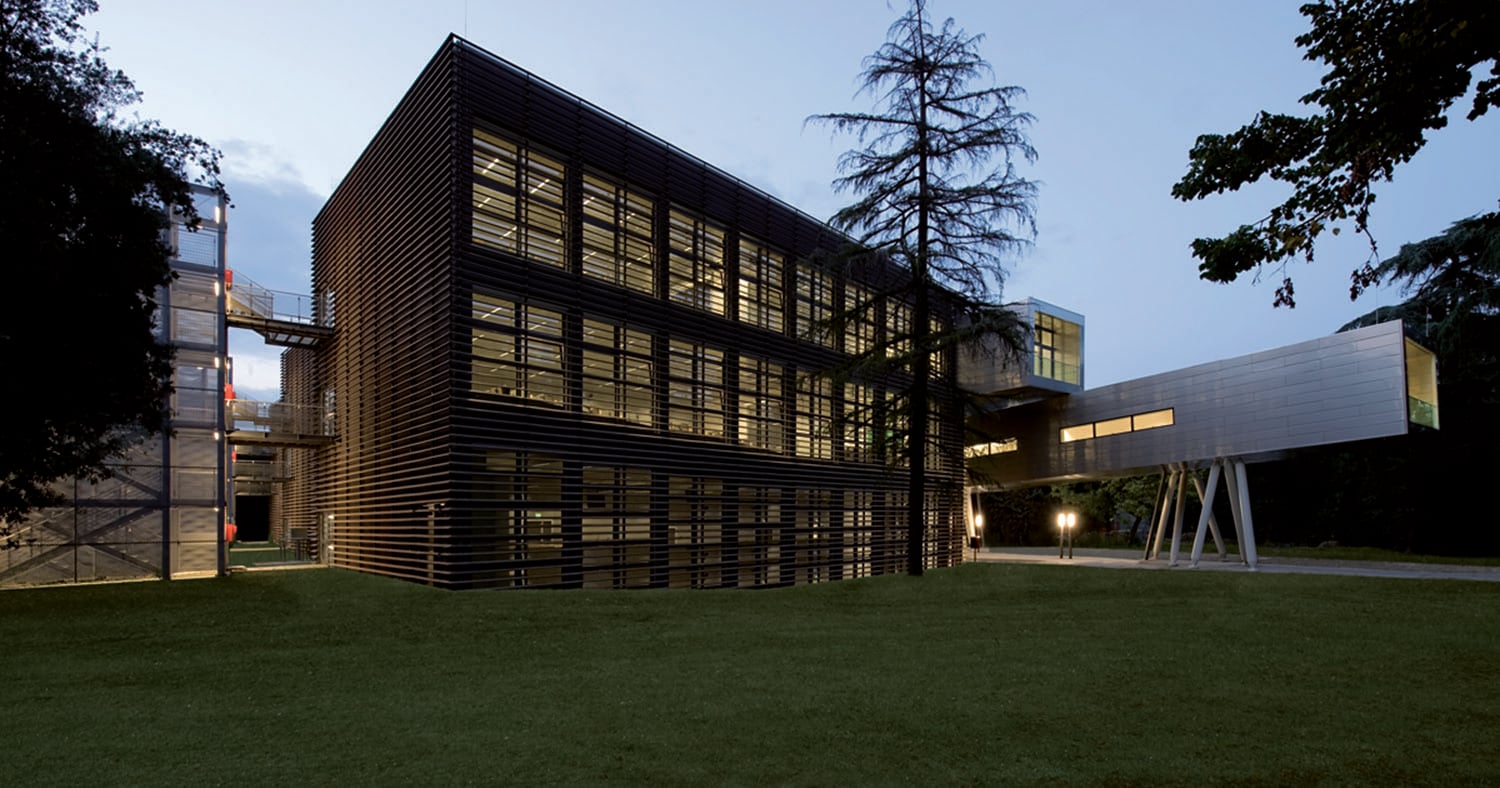
The irregular geometry of the long pedestrian mall, the strong visual and physical permeability towards the park, the lighting system extending into the outdoor spaces, and the sun-shading brise-soleil of the classroom blocks (23 linear kilometres of recycled material) - which conversely penetrate the interior - dissolve the boundary between interior and exterior, between collective and individual space.
The entire complex is immersed in the park, which, once the hospital fence was removed, finally becomes part of the city’s fabric. The reflective steel cladding multiplies the presence of the trees and records the passing seasons.
This is an organism designed not to astonish but to spark curiosity: an urban social network, a university agora conceived to stimulate perception and sensitivity - achieved without consuming any new land.
Key Figures
• Total area: approx. 9 ha, including 3.2 ha of public park and 1.8 ha of university courtyards
• Volume: reduced from 247,000 m³ (former hospital) to 238,000 m³ (final configuration)
• New urban cycle-pedestrian paths: 1,270 linear metres
• Soil sealing reduced: 2,000 m²; increased permeable surface in the park
• Built surfaces to date: 22,600 m² of restored S.l.p., 13,300 m² of new construction
• Cost of Phases 1–2: €28 million
Credits
• City: Forlì
• Country: Italy
• Client: Municipality of Forlì; University of Bologna; Ser.In.Ar. Soc. Cons. p.A
• Completion: 09/2014
• Gross Area: 13,300 m²
• Architects: Lamberto Rossi Associati – LRA
• Design Team: Lamberto Rossi, Massimo Galletta, Roberto Lazzarini, Marco Tarabella, Polo Zilli and team / collaboration on design phases: Maren Schmidt